01 The premise
Somebody drew the Blueprint. You’ve been living inside it.
Patrick Klaassen writes about the systems nobody voted on, Religion, Money, Culture, Power, and the Clock, and why walking out of them starts with seeing the lines.
We didn’t design these cages. We just stopped noticing the bars.

02 The case
Most people already feel this. Almost nobody says it out loud.
We inherit our beliefs before we can question them, our debts before we understand interest, our schedules before we’ve decided what a life is for. Then we call the result “normal” and spend the rest of our years managing it.
Patrick Klaassen’s work doesn’t ask you to burn anything down. It asks a smaller, harder question: which parts of your life did you actually choose, and which parts were simply installed?
The books below are an attempt to trace those lines back to their source and an invitation to compare notes with everyone else who’s noticed them too.
“This isn’t a call to disorder. It’s a call to notice who benefits from yours.”
03 The questions
Questions that refuse to go away.
Why are we richer than any generation in history, yet increasingly anxious?
Why are we more connected than ever, yet feel more alone?
Why has technology saved us time while leaving us feeling we have none?
Why do systems created to serve humanity increasingly feel as though humanity exists to serve them?
“Anything created by humanity deserves to be questioned by humanity.”— Patrick Klaassen
04 The work
Two books. One throughline.
Two examinations of the systems we inherited — and the assumptions we rarely stop long enough to question.

The Illusion of Order
How Religion, Money, Culture and Power Keep Us in Line
What if the systems we rely upon every day have become invisible precisely because they surround us?
This book explores how institutions that once created stability can also shape identity, influence behaviour and define the boundaries of acceptable thought.
It is not an attack on faith, economics or culture. It is an invitation to examine them with fresh eyes.
Explore The Illusion of OrderTIME / PRODUCTIVITY / LIFE
The Invention
of Hurry
How We Mistook a Method of Measuring Life for the Meaning of Life
The clock was invented to measure time. Somewhere along the way, it began measuring people.
Today many of us organise our worth around productivity. We apologise for resting. We celebrate being busy. We rush through moments we will never experience again.
If the purpose of time is to help us live, why has it become something we are constantly trying to outrun?
Explore The Invention of Hurry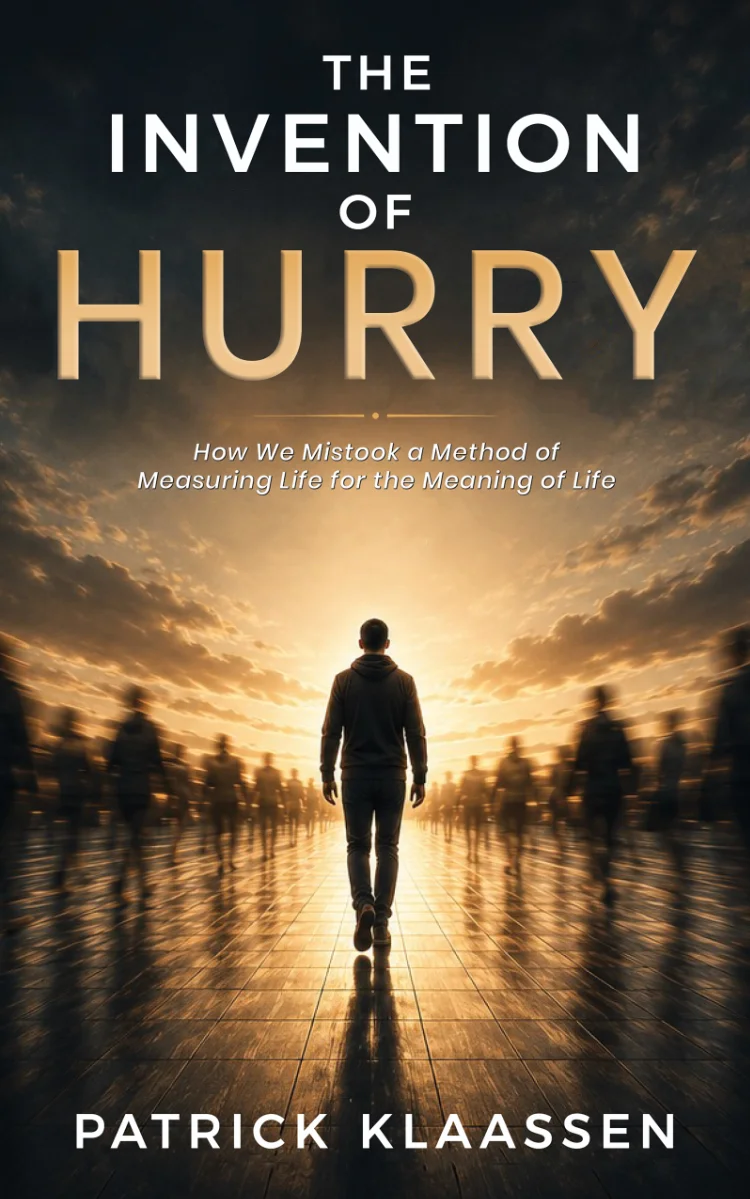
05 The signature idea
Five forces. One convergence point.
Different systems. Different histories. Yet every one eventually arrives at the same place: the way a human being thinks, chooses and lives.

If you have ever felt that something about modern life does not make sense…
If you have ever wondered why success often feels empty…
If you have questioned systems you were told never to question…
Welcome. The conversation starts here.
Perhaps together we can imagine a future where humanity once again becomes more important than the systems it created.